
Best Wearables I Use Every Day
My Ultimate Health & Sports Tracking Setup: What Actually Works?
I've tested hundreds of smartwatches, smart bands, smart rings, and even smart beds. Based on all this systematically collected scientific data, I’ve finally devised my personal "Ultimate Health and Sports Tracking Setup."
This isn't about finding a single universal "best" device—that doesn't exist. Instead, this is about the specific combination of tools I use to track my sleep, recovery, and performance, based on objective accuracy data.
Here is the breakdown of the gear I use every day, why I use it, and the data that backs it up.
The Foundation: Sleep Tracking
Sleep and recovery are the basis for everything else. My personal setup is slightly redundant (I wear multiple devices for testing), but here are the top performers I rely on.
WHOOP Strap: The Biceps Advantage
The WHOOP Strap remains my favorite overall health and sports tracker, primarily because of its form factor flexibility. I wear it on my biceps, not my wrist.
Wrist vs. Biceps: On the wrist, I often get contact dermatitis and lower accuracy. On the biceps, it’s invisible, comfortable, and significantly more accurate [03:06].
Sleep Accuracy: In a study I conducted with the University of Salzburg, the WHOOP performed exceptionally well against the gold standard:
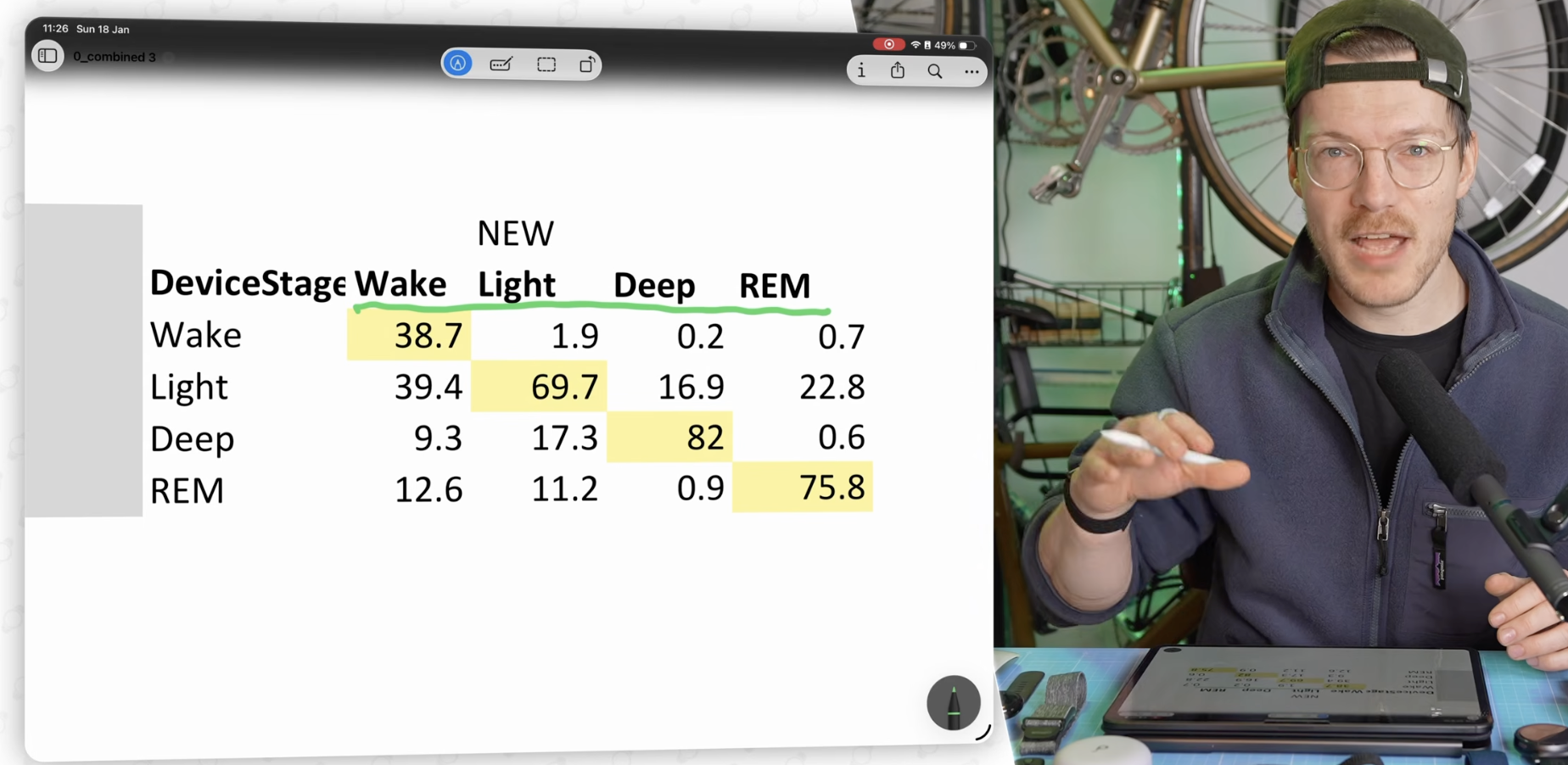
Sleep Stage Tracking Performance in a Sleep Study
Oura Ring: Comfort & Consistency
I recently started using the ceramic version of the Oura Ring. While the WHOOP is great for data, the Oura Ring wins on comfort and app experience.
Sleep Staging: It is one of the most consistent devices I've tested, performing very close to the Apple Watch and WHOOP [15:14].
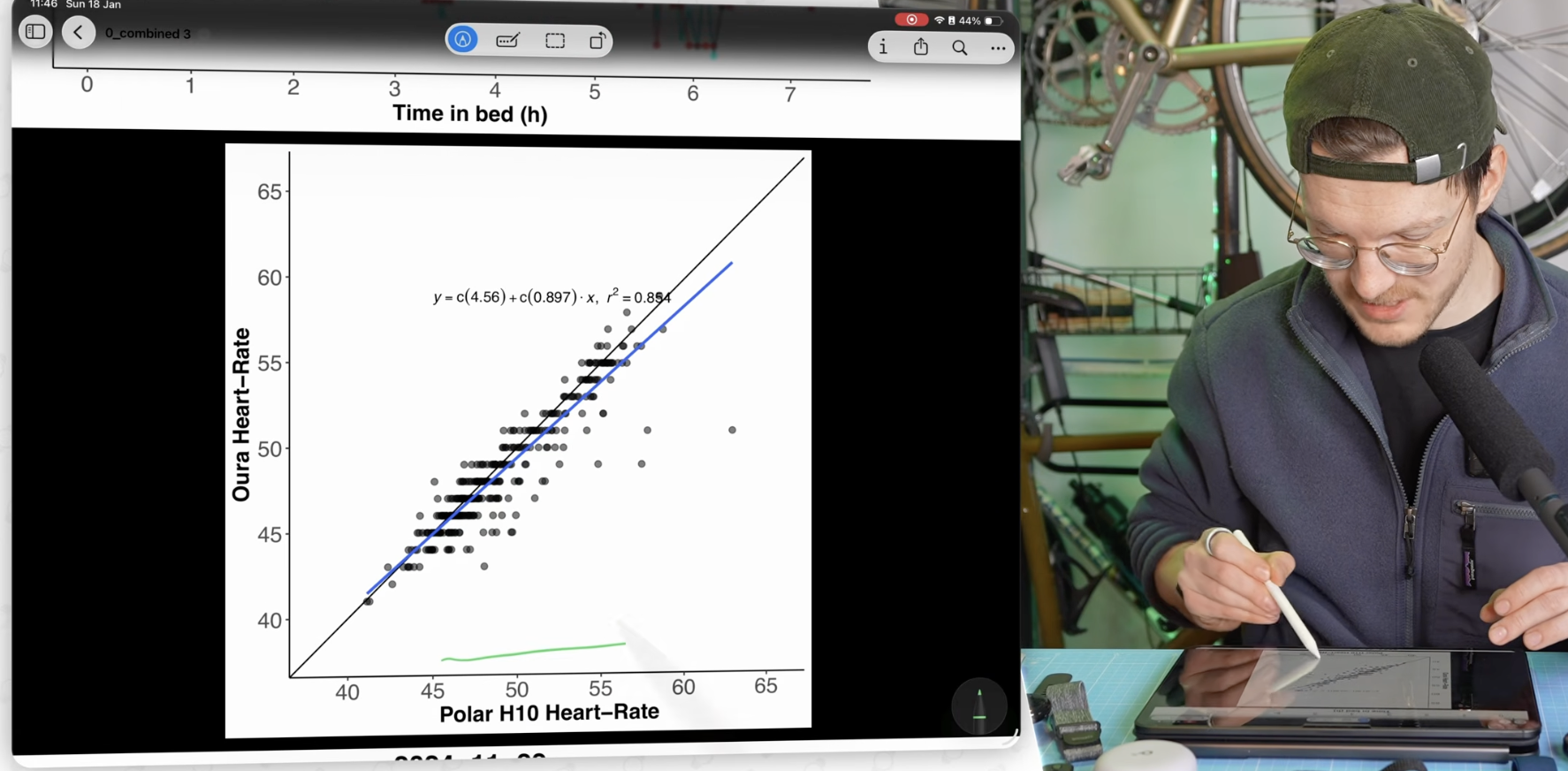
Heart Rate & HRV: During sleep, the Oura Ring is nearly perfect. My testing shows the heart rate and HRV signal basically overlapping perfectly with the reference device [14:15].
The Downside: Do not buy it for sports tracking. Smart rings still struggle to track heart rate accurately during exercise [13:03].
The "Best For Sleep Improvement": Eight Sleep Pod
If budget is no issue, the Eight Sleep Pod is the best sleep improvement device I own. It’s a mattress cover that actively cools or heats your bed.
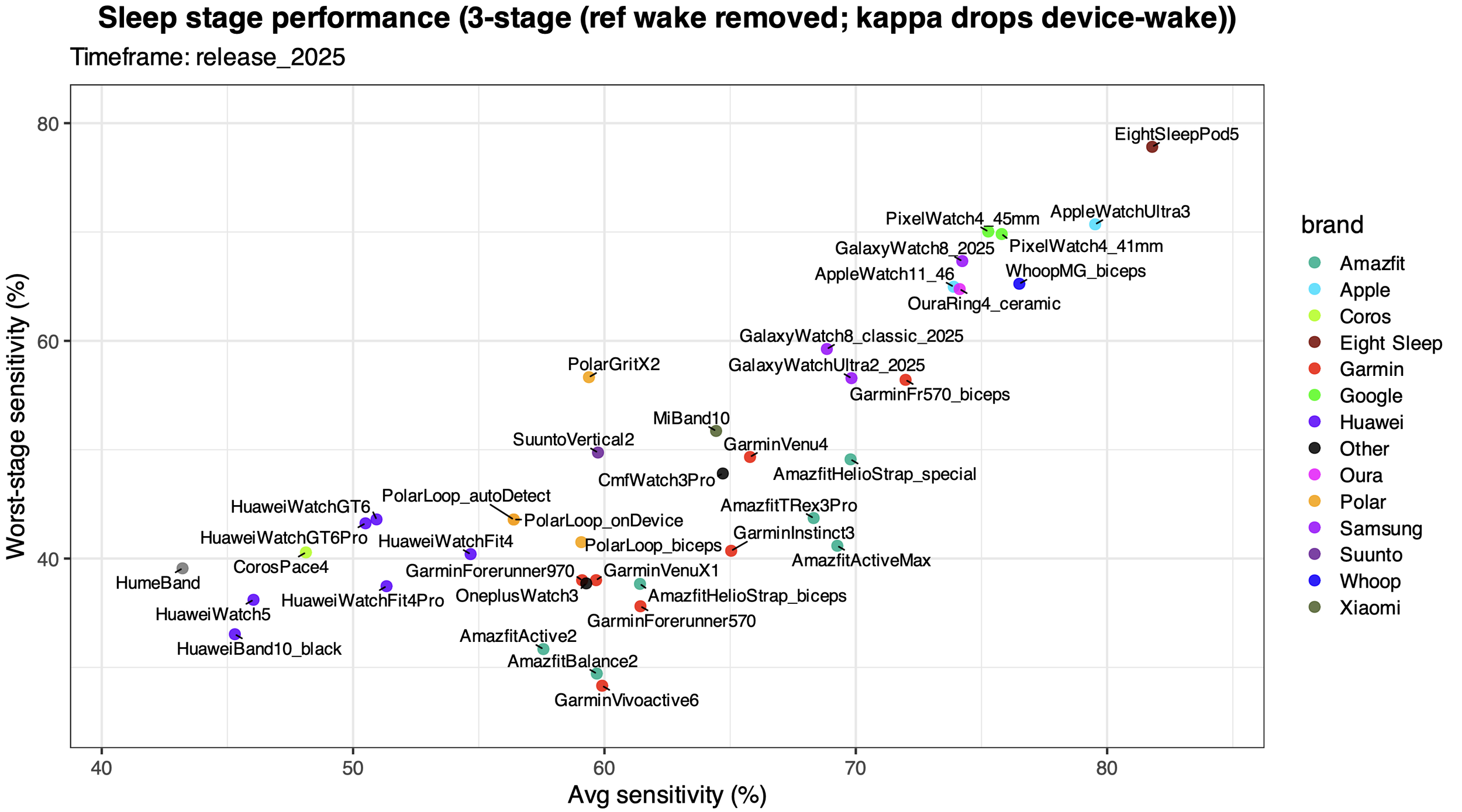
Overview of the Sleep Stage performance! Note: INTERACTIVE PLOT
Budget Alternatives
You don't need to spend thousands.
Amazfit Helio Strap ($99): A surprisingly okay sleep tracker and a great budget alternative to WHOOP, but it struggles with REM sleep [17:01].
Fitbit (Charge 6): Still a solid choice for reliable sleep staging without the high price tag [17:55].
Why Track Sleep?
I use this data for two main purposes:
Short-term: Identifying "outlier days." If my HRV is low or resting heart rate is high, I check if I’m overtrained or getting sick, and adjust my workout intensity accordingly [18:36].
Long-term: Correlating lifestyle choices (like caffeine intake or late meals) with deep sleep trends [19:29].
Sports Tracking: The GPS Heavyweights
For running and cycling, I prefer a dedicated sports watch. My priority here is Dual-Frequency GPS for the most accurate distance and pace tracking.
Garmin Forerunner 970
My daily driver for running is the Garmin Forerunner 970.
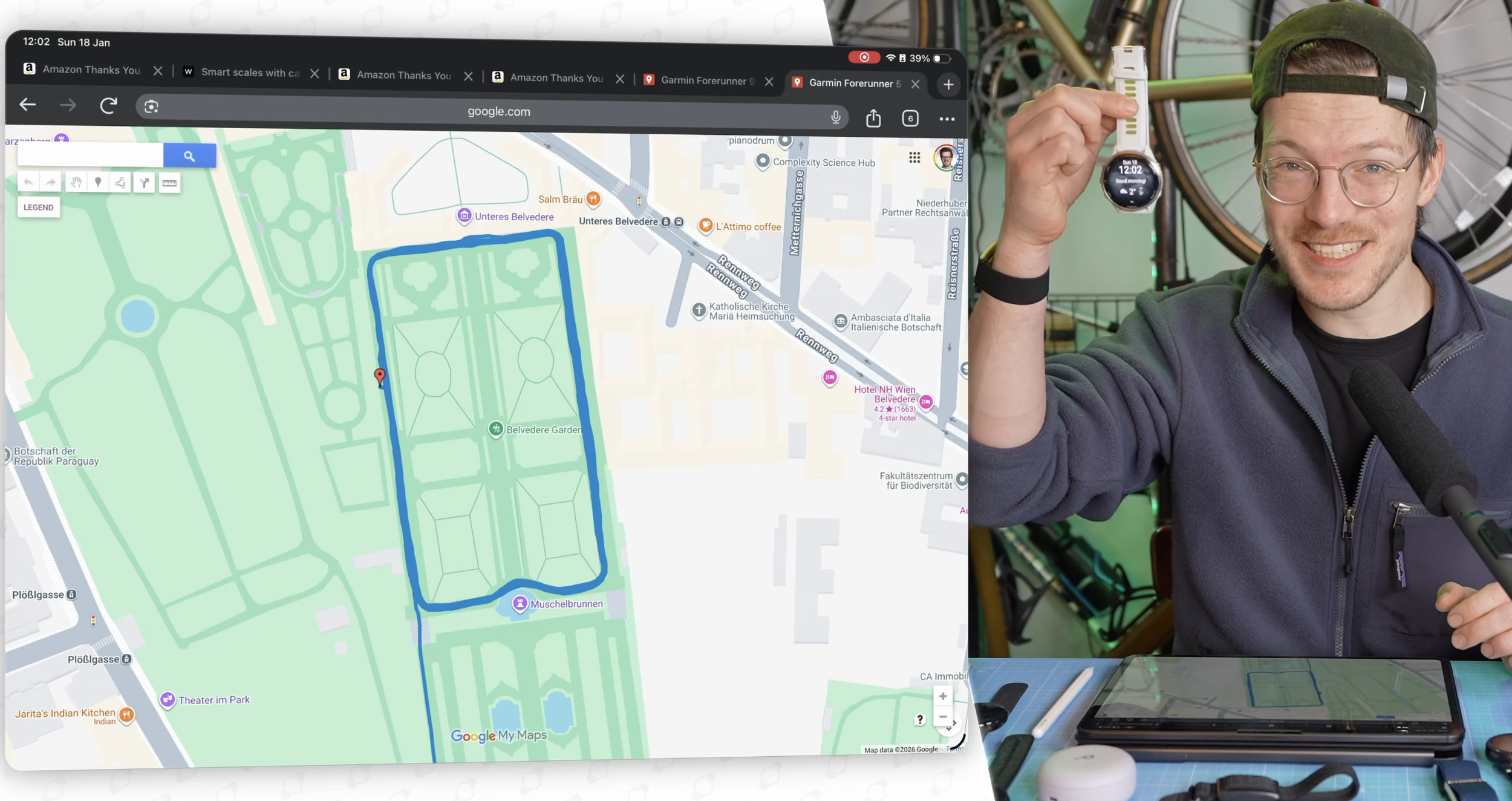
GPS track consistency showing the Garmin 970 running
Suunto Race 2 & Vertical 2
If I’m judging purely on design, I prefer Suunto. The Suunto Vertical 2 and Race 2 also offer top-tier GPS accuracy, rivaling Garmin in my tests [24:50].
Polar & COROS
Polar: I respect Polar for packing features into their devices (like the Grit X2) without software-locking them behind higher price tags, unlike Garmin [27:24].
COROS: The Pace series remains a high-value option with excellent GPS performance [26:42].
Heart Rate Tracking: The Reality Check
This is where many devices fail. For sports, I always use an external chest strap.
The Reference: I use the Polar H10 or Wahoo chest straps. They are the most reliable way to measure heart rate [25:39].
Wrist-Based Limitations: While Apple, Huawei, and Pixel watches are getting very good at wrist-based heart rate, traditional sports watches like Garmin and Polar still struggle with optical heart rate accuracy during intense activity [30:19].
Surprise Performer: The Amazfit Helio Strap (worn on the biceps) actually outperformed many top-tier watches in my heart rate testing, making it a hidden gem for tracking intensity [31:49].
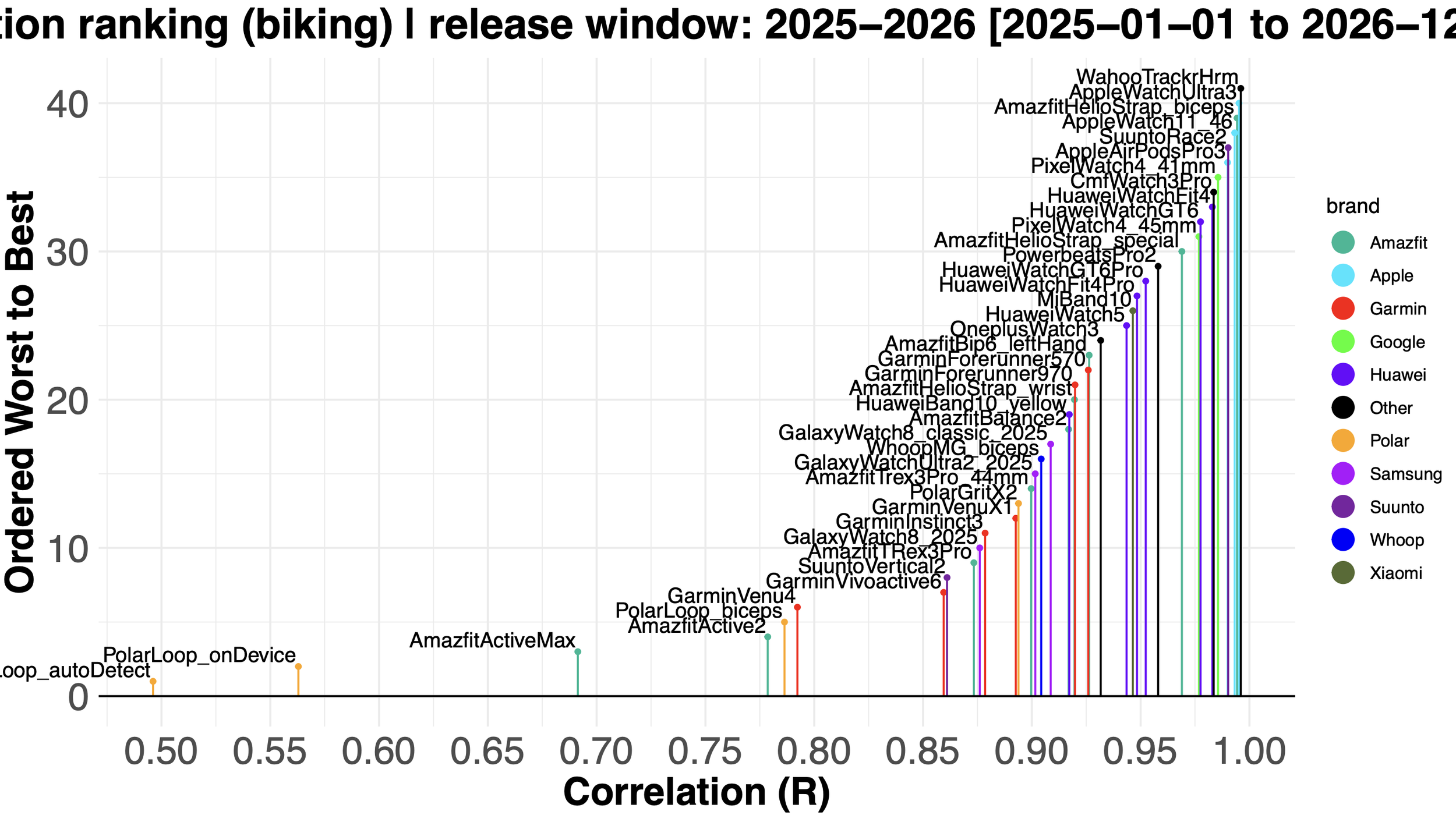
Heart Rate Tracking Performance For Outdoor Cycling (Best Devices On The Top Right)
Apps & Specialized Gear
VO2 Master Analyzer: I own a $6,000 VO2 Master mask for metabolic testing. It’s overkill for 99% of people, but necessary for my lab-grade tests [33:50].
Runna: I use this for structured running programs (Intervals, Long Runs) [35:15].
Strava: My main hub for sharing workouts and social tracking [35:52].
Final Verdict
There is no single perfect device, but here is the cheat sheet:
Best Overall Health/Sleep Tracker: WHOOP (Biceps) or Oura Ring (Ceramic).
Best Sports GPS: Garmin Forerunner 970 or Suunto Race 2.
Best Budget Option: Amazfit Helio Strap or Fitbit.
Most Accurate Heart Rate: Polar H10 Chest Strap (Don't rely on your wrist!).
Watch the full scientific breakdown here: https://youtu.be/1czir8fVuCg
▬▬▬▬▬▬▬▬▬▬👇DISCOUNTS/AFFILIATES*!👇▬▬▬▬▬▬▬▬▬▬
🔴 Anything on Amazon*: https://geni.us/thequantifiedscientist
🔴 Eight sleep best $$$ (€) discount*: https://eight-sleep.ioym.net/TheQuantifiedScientist + add code “TQS” for full discount
🔴 Whoop Strap MG / 5.0*: https://join.whoop.com/QuantifiedScientist (best $$$ off any new WHOOP membership)
🔴 Oura Ring Link: I recommend you search for a discount on reddit with the "Refer-A-Friend" program! If you can’t find one: https://ouraring.sjv.io/Oura4 * (affiliate link that supports the channel, but doesn't have a discount)
* Affiliate (paid) links support the channel by earning me a commission on any sale, and it doesn't cost you any more! My opinions are completely my own, and this content is not sponsored.
▬▬▬▬▬▬▬▬▬▬▬▬▬▬▬▬▬▬▬▬▬▬▬▬▬▬▬▬